


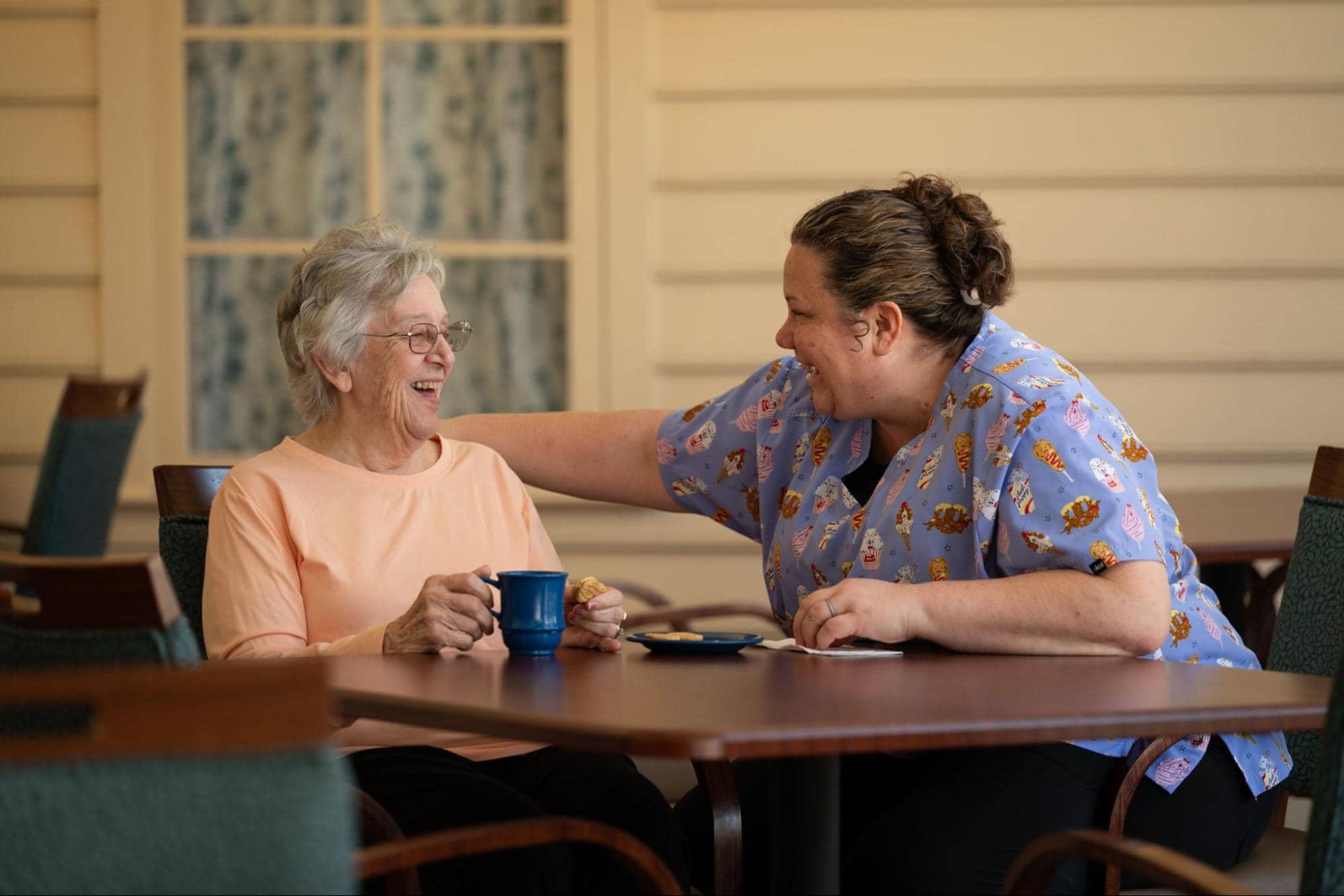
The move to personal care for a parent is a major milestone in an adult child’s life—everything from helping your parents to rightsize their belongings to handling finances and providing emotional support. Often, the first step when caring for aging parents is the conversation: do you feel confident living at home without support?
Even when you have the strongest relationships with your loved ones, these discussions can seem daunting. Here at Frederick Living, we have more than one hundred years of experience walking alongside families during the transition to personal care services.
In today’s blog, we’re introducing tried and true insights for addressing the move to personal care with empathy as well as icebreakers to get the conversation started.
Every caregiver journey is unique and the goal is always the same: the good of your loved ones. Sometimes, a parent may see the need for a change and other times they may not. Whatever road you walk, your presence, optimism, and words of encouragement are what they need most throughout life’s transitions.
“Love is not an affectionate feeling, but a steady wish for the loved person’s ultimate good as far as it can be obtained.”
— C.S. LewisThese conversations take courage for adult children, especially when they anticipate a negative response. This fear of confrontation often leads to polite avoidance and, eventually, to a delayed conversation after an emergency, such as a sudden fall or illness.
Dr. Brené Brown is a research professor, iconic for her work on empathy. She explains that “clear is kind, unclear is unkind.” In other words, it’s better to be honest upfront rather than tiptoe around an issue and surprise a loved one with your thoughts later. It’s tempting to protect the people you care about most from stress or pain, but delaying the inevitable only prolongs the problem and allows it to grow.
Upfront honesty honors your parents’ dignity while creating a safe, connected space to navigate life’s transitions together. Dr. Brown refers to these conversations as a “rumble.” It’s a discussion or conversation where you commit to being vulnerable, staying curious about the other person’s feelings, and accepting that the conversation may not have an immediate outcome.
On the spot, it’s often difficult to know how to respond to a parent’s objections. There are several common reasons to hesitate to move to personal care and constructive answers you can offer:
Hesitation: “I’m happy and safe living on my own:”
Response: “I know you value your freedom. Actually, personal care can help you stay independent longer because there’s always a helping hand when you need it.”
Hesitation: “I’m not ready yet.”
Response: “It’s better to transition to community life sooner rather than later. It will give you control over the move rather than having to move quickly after an emergency.”
Hesitation: “It’s too expensive”
Response: “All-inclusive communities offer financial options and payment models to fit your budget. Plus, it’s often easier to afford all-in-on expenses.”
Hesitation: “I don’t want a stranger taking care of me:”
Response: “You have the final say on how much help you want to accept from the staff and you’ll have an opportunity to get to know them over time.”
Hesitation: “I don’t want to give up my privacy.”
Response: “You’ll have a private living space where you can set your schedule, decorate your home as you like, and live independently. Help is available if and when you need it.”
Hesitation: “I’ll be bored or lonely:”
Response: “Many care communities offer daily social activities, outings and hobby groups. It’s actually far easier to stay connected with family and visitors without leaving the campus.”
Studies reveal that personal care residents have a higher rate of physical and well-being with the support of an adult child. Even on the days when the journey seems long, you’re offering hope and healing to your parents.
“There’s no such thing as a small act of kindness. Every act creates a ripple with no logical end.”
— Scott AdamsWhen facing a challenging conversation, it can be difficult to know where to begin. Rather than suggesting a move to personal care at the start, it’s often helpful to begin addressing the underlying reasons your parents might need extra assistance.
These are the top questions you can ask to get started talking about life’s next transition:
There are many reasons that aging parents might hesitate to make the move to personal care: less independence, moving away from family and friends, and downsizing. Yet, there are endless opportunities to pursue hobbies, build new friendships, rightsize belongings, and visit with family at a community like Frederick Living. You have a unique opportunity to be the voice of encouragement for your parent’s next chapter.
“Try to be a rainbow in someone’s cloud.”
— Maya AngelouEveryone needs a helping hand in life. For more than a century, Frederick Living has been helping families make the transition to personal care.
The services at Frederick Living’s Magnolia House balance independent living for aging parents with peace of mind for adult children, offering 24/7 support from trained personal care assistants (PCAs).

Whether your loved one needs hands-on assistance with bathing, dressing, and grooming or medication management, we offer the services they need in a supportive community setting.
Want to find out more info and discuss your options with a friendly specialist? Get in touch with our team today to consider Frederick Living as the next chapter for your loved one.

Betsy Natter, Storyteller for Frederick Living, brings a wealth of marketing and storytelling experience to the community’s team.